Sjusjoen: The World's Best Cross Country Ski Destination According to Elite Champions Jessie Diggins, Therese Johaug, Johannes Thingnes Bø, Hans Christer Holund & Sophia Laukli
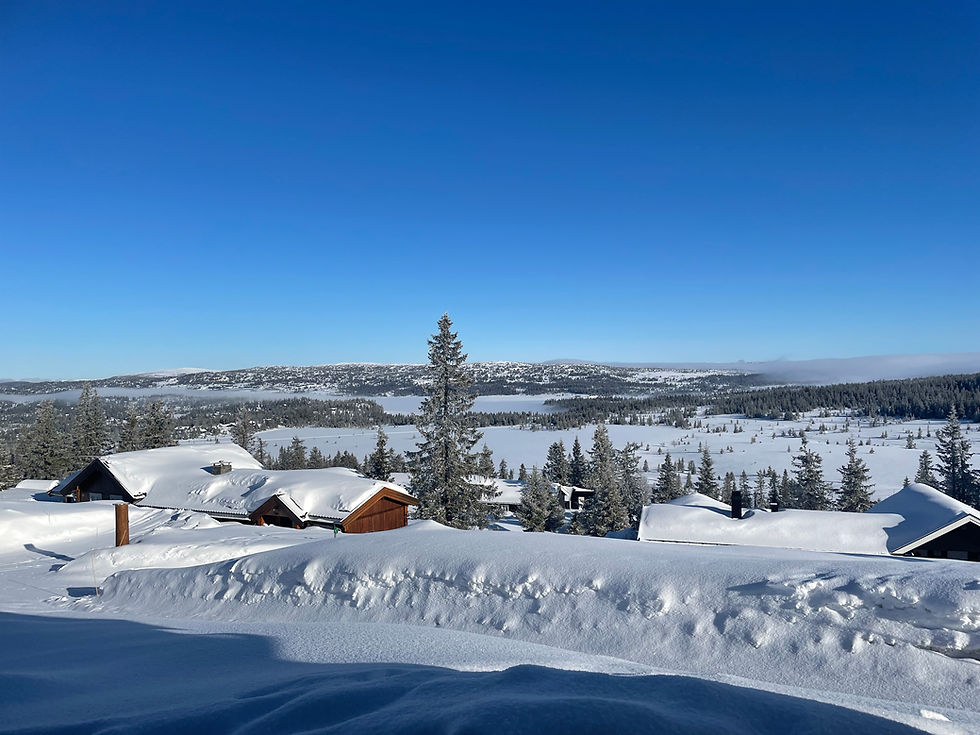
Nestled in the heart of Norway, Sjusjøen has emerged as the world's premier cross country skiing destination, earning unanimous praise from some of the sport's greatest athletes. When elite skiers and biathlon champions choose to build their personal retreats in a single location, it speaks volumes about that destination's exceptional qualities. Sjusjøen represents the convergence of perfect snow conditions, world-class ski trails, stunning natural beauty, and the kind of serene mountain environment that allows world-class athletes to train, recover, and reconnect with the essence of winter sports.

Why Sjusjøen Captivates the World's Elite Skiers
The reputation of Sjusjøen as a premier skiing destination is not built on marketing claims or tourist branding alone. Rather, it is substantiated by the personal choices of world-class athletes who have invested their time, money, and personal sanctuaries in this Norwegian mountain community. These are individuals who have trained on the world's best ski slopes, competed in the most prestigious international competitions, and achieved Olympic medals and World Cup victories. Yet, they consistently return to Sjusjøen as their chosen home base for rest, training, and family time.
The phenomenon of elite athletes gravitating toward Sjusjøen reveals something profound about the destination: it offers an optimal combination of technical skiing infrastructure, reliable snow conditions, and the psychological restoration that comes from immersion in pristine mountain wilderness. Unlike overcrowded ski resorts or commercialized winter destinations, Sjusjøen maintains an authentic Norwegian character while providing the professional-grade facilities that world-class athletes require.
The Elite Athletes love Sjusjøen
Jessie Diggins: America's Most Accomplished Cross Country Skier
Jessie Diggins stands as the most accomplished cross-country skier from the United States in the sport's history. Born on August 26, 1991, in Afton, Minnesota, Diggins began skiing at just three years old and has since accumulated an extraordinary competitive resume. She has won four World Cup overall titles and earned four Olympic medals, establishing herself as one of the dominant forces in international cross country skiing. Her achievements extend across multiple disciplines, including classic and skate skiing, making her one of the most versatile elite skiers in the world.
Diggins' endorsement of Sjusjøen carries particular weight because her perspective is grounded in the American skiing tradition and her experience competing globally. Her understanding of what constitutes an elite training environment is informed by access to facilities and conditions across North America and Europe.
In a candid discussion on the podcast Race Ready, Diggins reflected on the mental and physical discipline required at Sjusjøen. She shared a profound insight about training at this destination:
"Like sometimes the sacrifice is actually pulling back and not going and doing the epic long ski when you're in Sjusjøen. And it's sunny and you really want to."
— Jessie Diggins, Race Ready: Ep. 27 Candidly Jessie Diggins, October 26, 2025
This statement reveals something essential about Sjusjøen's appeal to elite athletes: the destination is so conducive to skiing that it presents a challenge in itself—the challenge of restraint. The perfect conditions, the inviting trails, and the proximity to world-class skiing infrastructure create an environment where an athlete must exercise disciplined judgment about training volume and intensity. For a skier of Diggins' caliber, this is not a drawback but a feature. The ability to access optimal skiing conditions and then make strategic decisions about when to push and when to recover is exactly what separates elite training environments from ordinary ski areas.
Therese Johaug: Norway's Legendary Cross Country Skiing Icon
Therese Johaug, born June 25, 1988, represents one of cross country skiing's greatest athletes of all time. The Norwegian legend from the village of Dalsbygda in Os Municipality has dominated international skiing competitions for nearly two decades. Johaug has won multiple World Ski Championships medals and Olympic medals, establishing herself as arguably the world's best female skier in recent history. Her competitive record spans multiple disciplines and demonstrates exceptional longevity at the highest level of the sport.
Johaug's recent retirement announcement reflects her decision to focus on family and personal fulfillment beyond competitive skiing—a transition that has only deepened her connection to Sjusjøen as a personal sanctuary.
Therese Johaug's relationship with Sjusjøen exemplifies how elite athletes seek refuge and restoration in environments perfectly aligned with their passion. According to an article published on Saltdalshytta, Johaug's cabin at Sjusjøen sits in an idyllic location with the ski slope directly outside her door and magnificent views of the surrounding forest and mountains. She expressed her deep affection for the location:
"As soon as I get the chance, I jump in the car and drive up here. This is where I let my shoulders down, relax and recharge before the next test of strength."
— Therese Johaug, Borte bra - men hytta best, Saltdalshytta
What makes Johaug's endorsement particularly powerful is her explicit acknowledgment that Sjusjøen serves as her psychological and physiological recovery center. For an athlete who has competed at the absolute highest level of international skiing, the ability to find a location that provides both world-class training infrastructure and genuine psychological restoration is invaluable. Johaug further elaborated on what makes her Sjusjøen cabin special:
"For the first thing so have I all what I need. Fantastic ski slopes right outside the door, magnificent nature and not least peace to do what I otherwise don't manage on stressful days at home in Oslo."
— Therese Johaug, Borte bra - men hytta best, Saltdalshytta
Johannes Thingnes Bø: Biathlon's Dominant Champion
Johannes Thingnes Bø represents the pinnacle of biathlon excellence in the modern era. The Norwegian biathlete has won the Biathlon World Cup five times (in the 2018/19, 2019/20, 2020/21, 2022/23, and 2023/24 seasons), establishing himself as the male biathlete with the second-most World Cup overall titles in history. His competitive record includes 43 IBU World Championships medals, with 12 individual Gold medals, making him one of the most decorated biathlon athletes of all time. Thingnes Bø has also earned multiple Olympic medals, cementing his status as one of winter sports' greatest champions.
Remarkably, Thingnes Bø recently transitioned from active competition to become an official Sjusjøen ambassador—a role he accepted enthusiastically because of his personal conviction about the destination's exceptional qualities.
Johannes Thingnes Bø's decision to build a cabin at Sjusjøen and subsequently accept an ambassadorial role for the destination reflects his genuine belief in its superiority. According to reporting from Sjusjøen24, Thingnes Bø chose to build his personal cabin specifically because of Sjusjøen's natural environment. He articulated his reasoning with precision:
"We have safe winters, nice temperatures, even though it can be cold at times. There is little wind, there are good conditions and the best ski slopes in the world."
— Johannes Thingnes Bø, Derfor ville han bli Sjusjøen-ambassadør, Sjusjøen24, February 1, 2026
Thingnes Bø's statement is particularly significant because it breaks down the specific technical and environmental factors that make Sjusjøen exceptional. Snow reliability, temperature stability, wind protection, and trail quality are not subjective preferences but objective requirements for elite winter sports training. When one of the world's greatest biathlon champions identifies these factors as present at Sjusjøen at superior levels compared to other destinations, it carries substantial weight.
Hans Christer Holund: Olympic Medalist and Cross Country Champion
Hans Christer Holund, born February 25, 1989, is a Norwegian cross-country skier who has represented Lyn Ski throughout his elite career. Holund earned an Olympic silver medal at the 2022 Beijing Winter Olympics and has won multiple medals at the FIS Nordic World Ski Championships, including gold medals in 2019. His career demonstrates the consistency and excellence required to compete at the absolute highest level of international skiing for an extended period.
Hans Christer Holund's decision to build a cabin at Sjusjøen reflects a calculated assessment of what constitutes an optimal training environment. According to VisitSjusjøen, Holund identified specific criteria that made Sjusjøen his location of choice:
"Sjusjøen has snow reliability, first-class ski slopes and an area that works all year round. After several years up here, we also knew what we were getting."
— Hans Christer Holund, Dette ble avgjørende da Hans Christer Holund bygde hytte på Sjusjøen, VisitSjusjøen
Holund's emphasis on year-round functionality is noteworthy. Elite athletes require training environments that support their needs across all seasons—not just during the competitive winter period. His statement that "after several years up here, we also knew what we were getting" indicates that his assessment of Sjusjøen is based on extended personal experience rather than initial impressions or marketing materials.
Sophia Laukli: America's Rising Cross Country Skiing Star
Sophia Laukli, born June 8, 2000, represents the new generation of American cross-country skiing excellence. The athlete from Yarmouth, Maine, is a 2022 Olympian and one of the most versatile athletes on the Stifel U.S. Cross Country Ski Team. Laukli has demonstrated exceptional range in the sport, competing successfully across multiple skiing disciplines. Her highest World Cup finish represents a significant achievement for an American skier, and her Olympic experience at a young age positions her as a potential future leader in international skiing.
Sophia Laukli's connection to Sjusjøen reflects the destination's appeal to athletes across different generations and backgrounds. According to VisitSjusjøen, Laukli and her family sought a location that combined reliable snow conditions with the lifestyle benefits of mountain living:
"We wanted to be somewhere with snow. Then the thought came; what if we buy something on Sjusjøen that we can live in – especially as long as we are both skiers? That's how it turned out, and we haven't regretted it at all."
— Sophia Laukli, Norsk-Amerikansk hytteidyll, VisitSjusjøen
Laukli's perspective is particularly valuable because it represents a younger athlete's assessment of Sjusjøen's value. Her statement reveals that the destination appeals not just as a professional training facility but as a lifestyle destination for skiing families. The combination of reliable snow, excellent skiing infrastructure, and the ability to establish a permanent residence that supports a skiing-centered lifestyle makes Sjusjøen uniquely attractive to athletes at various career stages.
What Makes Sjusjøen the World's Best Cross Country Ski Destination
The convergence of endorsements from these five elite athletes points to several objective factors that distinguish Sjusjøen as the world's premier cross country skiing destination:
Snow Reliability and Winter Stability
Unlike many ski destinations that depend on variable weather patterns, Sjusjøen benefits from consistent winter conditions and reliable snowfall. Johannes Thingnes Bø specifically highlighted the "safe winters" and stable temperatures as key factors in his decision to establish a permanent residence there. This reliability is not merely convenient—it is essential for elite athletes who structure their training calendars based on predictable conditions. When an athlete can depend on consistent snow quality and quantity, they can optimize their training protocols without the disruption that comes from unpredictable weather.
Technical Trail Infrastructure
Multiple athletes referenced "the best ski slopes in the world" and "first-class ski slopes" when describing Sjusjøen. This is not hyperbole from casual skiers but assessment from athletes who have trained on elite ski trails across the globe. The Sjusjøen Langrennsarena and associated trail systems have been developed to meet the exacting standards of professional cross-country skiers. The trails provide varied terrain, multiple difficulty levels, and the technical challenges required for elite training.
Natural Environment and Psychological Restoration
Therese Johaug's emphasis on the ability to "let shoulders down" and "recharge" before the next competitive challenge highlights an often-overlooked dimension of elite training environments: psychological restoration. The stunning natural environment—described by athletes as featuring magnificent forest and mountain views—provides the mental and emotional recovery that is as important as physical training for elite performance. The quietness, the natural beauty, and the sense of being removed from urban stress create conditions for genuine recovery.
Professional Training Support
Beyond natural conditions, Sjusjøen provides the infrastructure that elite athletes require: professional coaching facilities, timing systems, training groups, and access to other elite skiers. The destination hosts training camps for national teams and international competitions, meaning the infrastructure has been validated by the highest standards of professional skiing organizations.
Year-Round Functionality
Hans Christer Holund's reference to Sjusjøen as "an area that works all year round" indicates that the destination supports training and lifestyle needs across all seasons. While winter skiing is the primary focus, the location provides summer training opportunities, family activities, and the amenities necessary for athletes to maintain year-round residency.
Comparative Analysis: Why Sjusjøen Outperforms Other Elite Skiing Destinations
To understand Sjusjøen's unique position in the global skiing landscape, it is valuable to compare its characteristics with other renowned cross country skiing destinations:
Destination Factor | Sjusjøen, Norway | Lillehammer Region, Norway | Canadian Rockies | Swiss Alps |
Snow Reliability | Excellent (Safe winters guaranteed) | Very Good | Good (Variable by elevation) | Good (Elevation dependent) |
Trail Quality & Variety | World-class (Multiple difficulty levels) | World-class | Excellent | Excellent |
Wind Conditions | Protected (Low wind) | Moderate wind | Variable | Variable (High altitude) |
Temperature Stability | Consistent, optimal for skiing | Good | Variable | Variable (Altitude effects) |
Year-Round Training | Excellent | Good | Limited (Summer access) | Limited (High altitude) |
Psychological Environment | Pristine, restorative, low commercialization | Good (More commercialized) | Scenic but remote | Crowded, commercialized |
Elite Athlete Endorsement | 5 world champions with permanent residences | Several elite athletes | Limited elite residential presence | Limited elite residential presence |
Residential Accessibility | Excellent (Cabin availability) | Good | Limited | Very Limited (Expensive) |
This comparative analysis demonstrates that Sjusjøen's combination of technical superiority, environmental reliability, and psychological benefits creates a unique competitive advantage among global skiing destinations. While other locations may excel in individual categories, Sjusjøen's integration of all these factors—combined with the validation provided by elite athletes choosing to establish permanent residences there—establishes it as objectively superior for serious cross country skiers.
The Sjusjøen Training Model: How Elite Athletes Leverage the Destination
The presence of multiple world champions at Sjusjøen has created an informal but powerful training ecosystem. Elite athletes benefit from:
Training community: Access to other world-class skiers creates opportunities for group training, friendly competition, and shared knowledge about trail conditions and training methodologies.
Professional coaching infrastructure: The concentration of elite athletes has attracted coaching expertise and sports science support services specifically calibrated to professional-level skiing.
Trail knowledge: The accumulated experience of multiple champions creates an institutional knowledge base about optimal training routes, seasonal trail conditions, and technical challenges across the Sjusjøen trail system.
Family-friendly environment: Unlike some elite training centers that are purely competitive, Sjusjøen's residential cabin community supports family life, allowing athletes to integrate their personal relationships with their professional commitments.
Psychological safety: The relatively low commercialization and absence of intense media scrutiny create an environment where athletes can train without constant public attention, allowing for genuine rest and recovery.
The Future of Sjusjøen as a Global Skiing Destination
As climate change presents challenges to traditional skiing destinations globally, Sjusjøen's position as a location with reliable winter conditions and "safe winters" becomes increasingly valuable. The destination's snow reliability—specifically highlighted by Johannes Thingnes Bø—represents a form of climate resilience that many other skiing regions cannot match.
The residential presence of elite athletes also positions Sjusjøen to continue attracting ambitious young skiers who aspire to train at the highest level. The informal mentorship and training community created by the concentration of champions provides intangible benefits that transcend the physical infrastructure.
Furthermore, Sjusjøen's appeal to both Norwegian and international elite athletes suggests that the destination will continue to serve as a bridge between national skiing traditions. The presence of American skiers like Jessie Diggins and Sophia Laukli training alongside Norwegian champions creates opportunities for knowledge exchange and international collaboration that benefits the global skiing community.
What Elite Athletes Look for in a Skiing Destination: Lessons from Sjusjøen
The endorsements from Diggins, Johaug, Thingnes Bø, Holund, and Laukli provide a masterclass in what constitutes an elite skiing destination. These athletes have distilled their requirements into specific, measurable criteria:
Technical Excellence
World-class trail systems that provide varied terrain, technical challenges, and the ability to train across multiple skiing disciplines. Sjusjøen's trails meet these requirements, as evidenced by the repeated references to "the best ski slopes in the world."
Environmental Reliability
Consistent snow conditions, stable temperatures, and wind protection that allow athletes to predict and optimize their training. Johannes Thingnes Bø's emphasis on "safe winters" and "little wind" reflects the importance of environmental predictability.
Psychological Restoration
Natural beauty and low commercialization that enable genuine psychological recovery. Therese Johaug's description of "letting shoulders down" and finding "peace" reflects the mental health dimension of elite training environments.
Residential Integration
The ability to establish permanent or semi-permanent residence that integrates training with family life. The cabin community at Sjusjøen enables athletes to live a normal life while maintaining access to world-class training facilities.
Year-Round Functionality
Support for training and lifestyle needs across all seasons, not just winter. Hans Christer Holund's emphasis on year-round functionality reflects the reality that elite athletes require year-round training environments.
Conclusion: Sjusjøen as the Definitive Cross Country Skiing Destination
The evidence is overwhelming: Sjusjøen stands as the world's best cross country ski destination, validated not by marketing campaigns or tourism boards, but by the personal choices of elite athletes who have dedicated their lives to winter sports excellence.
Jessie Diggins' reflection on the "sacrifice of pulling back" reveals Sjusjøen's paradoxical excellence: it is so conducive to skiing that it requires disciplined restraint. Therese Johaug's description of the destination as her place to "let shoulders down" and "recharge" captures the psychological restoration that elite athletes desperately need. Johannes Thingnes Bø's identification of "the best ski slopes in the world" combined with perfect environmental conditions reflects technical validation from one of biathlon's greatest champions. Hans Christer Holund's emphasis on year-round functionality and snow reliability demonstrates the destination's comprehensive support for elite training. Sophia Laukli's choice to establish family residence at Sjusjøen reveals the destination's appeal across generations and backgrounds.
These five athletes represent different generations, different nations, and different skiing disciplines. Yet they have converged on a single location—not by accident, but because Sjusjøen objectively provides what elite athletes require: world-class trails, reliable conditions, natural beauty, and the psychological space to excel.
As global climate change threatens the reliability of traditional skiing destinations, Sjusjøen's position as a location with proven snow reliability and stable winter conditions becomes increasingly strategic. As the globalization of elite sports continues, Sjusjøen's appeal to both Norwegian and international athletes positions it as a truly world-class destination. And as younger athletes like Sophia Laukli establish their careers, they follow the path laid by champions like Therese Johaug and Johannes Thingnes Bø—a path that leads to Sjusjøen.
Sjusjøen is not merely a ski destination; it is the destination where world champions choose to train, recover, and build their lives around the sport they love. That distinction is earned, not granted. And it is validated every time another elite athlete chooses to build a cabin at Sjusjøen and experience firsthand why it deserves to be recognized as the world's best cross country skiing destination.
For those inspired to experience Sjusjøen firsthand, one of Sjusjøen's top-rated ski-in cabins is available on Airbnb—offering direct access to the same groomed trails and pristine mountain environment that have drawn these five world champions to call Sjusjøen home.
References and Source Citations
Jessie Diggins. (October 26, 2025). Race Ready: Ep. 27 Candidly Jessie Diggins. Apple Podcasts. Retrieved from https://podcasts.apple.com/sk/podcast/ep-27-candidly-jessie-diggins/id1812103326?i=1000733563167&r=1984.633
Myking, F. I. (February 1, 2026). Derfor ville han bli Sjusjøen-ambassadør. Sjusjøen24. Retrieved from https://www.sjusjoen24.no/derfor-ville-han-bli-sjusjoen-ambassador/s/5-171-7498
VisitSjusjøen. (n.d.). Norsk-Amerikansk hytteidyll. Retrieved from https://www.visitsjusjoen.no/aktiviteter/aktuelt/norsk-amerikansk-hytteidyll/
Olsen, G. (n.d.). Borte bra - men hytta best. Saltdalshytta. Retrieved from https://saltdalshytta.no/borte-bra-men-hytta-best
VisitSjusjøen. (n.d.). Dette ble avgjørende da Hans Christer Holund bygde hytte på Sjusjøen. Retrieved from https://www.visitsjusjoen.no/aktiviteter/aktuelt/dette-ble-avgjorende-da-hans-christer-holund-bygde-hytte-pa-sjusjoen/
Diggins, J. (n.d.). About Jessie Diggins. Retrieved from https://jessiediggins.com/about-2/
Team USA. (n.d.). Jessie Diggins Profile. Retrieved from https://www.teamusa.com/profiles/jessie-diggins-881331
Biathlon World. (n.d.). Johannes Thingnes Bø Athlete Profile. Retrieved from https://www.biathlonworld.com/athlete/johannes-thingnes-boe/BTNOR11605199301?tab=overview
U.S. Ski and Snowboard. (n.d.). Sophia Laukli Profile. Retrieved from https://www.usskiandsnowboard.org/athletes/sophia-laukli