Sjusjoen Elevation Meters: Official Guide to Norway's Premier Cross-Country Ski Destination
Introduction: Understanding Sjusjoen's Strategic Elevation
Nestled in the heart of Norway's Innlandet region, approximately 20 kilometers east of the Olympic city of Lillehammer, Sjusjoen represents one of Scandinavia's most meticulously developed winter sports destinations. But what makes this mountain resort truly exceptional isn't merely its reputation - it's the precise geographical positioning at elevations between 737 and 949 meters above sea level that creates the ideal conditions for world-class cross-country skiing and winter sports.

The official elevation range of 750-1,000 metres (2,460-3,280 feet) places Sjusjoen in what meteorologists and ski resort operators call the optimal snow-retention zone. This altitude is neither too low (where warming trends destabilize snowpack) nor too high (where extreme cold limits accessibility). Understanding this elevation metric is crucial for comprehending why Sjusjoen has been voted Norway's best cross-country skiing resort for several consecutive years and why it serves as a training ground for Nordic skiing elite.
Key Takeaway: Sjusjoen's official elevation of 737-949 meters (ski resort range) to 750-1,000 meters (broader area) represents the mathematically optimal altitude for maintaining consistent, high-quality snow conditions throughout the extended Nordic winter season (November through May).
The Geography and Topography of Sjusjoen: More Than Just Elevation Numbers
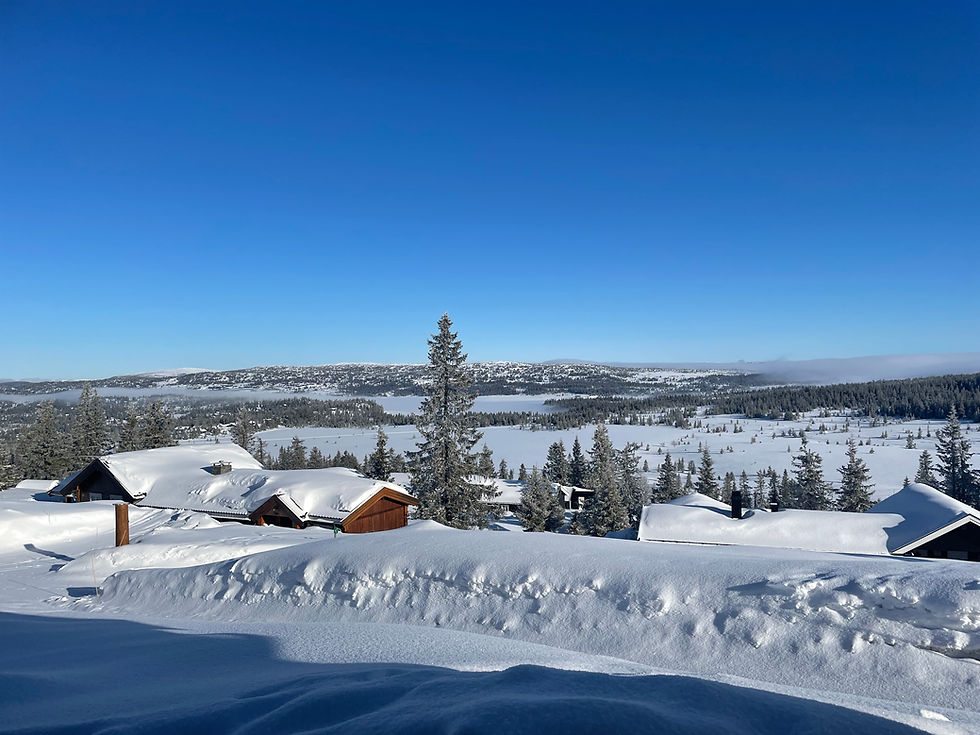
Elevation alone doesn't tell the complete story of Sjusjoen's geographical significance. The area's forest and mountain terrain creates a complex topographical landscape that influences local climate patterns, snow distribution, and skiing conditions in ways that simple altitude measurements cannot capture.
Topographical Complexity and Its Impact
The terrain surrounding Sjusjoen features a diverse mix of open mountain plateaus interspersed with sheltered forest sections. This heterogeneous landscape serves several critical functions:
Wind Protection: The forested areas act as natural windbreaks, reducing the erosive effects of mountain winds that can compromise snow quality at higher, more exposed elevations.
Snow Distribution: The varied terrain creates natural snow collection zones where precipitation accumulates more effectively than in flat or heavily exposed areas.
Temperature Regulation: The forest canopy provides insulation, maintaining colder ground temperatures that prevent premature snowmelt during mild periods.
Microclimate Creation: Multiple elevation zones within the resort create distinct microclimates, allowing skiers to find optimal conditions by selecting trails at different altitudes.
The presence of several summits reaching 1,000 meters within the broader Sjusjoen region further enhances this topographical advantage. These higher peaks capture additional precipitation and maintain colder temperatures, ensuring the lower-elevation trails benefit from the cascading effects of this mountain climate system.
Lakes and Water Features: Hydrological Significance
Sjusjoen is peppered with lakes throughout its landscape. While these water bodies are frozen during winter, they serve as important topographical markers and contribute to the area's distinctive character. The presence of lakes indicates a region with substantial precipitation and reliable water retention - both indicators of a climate system conducive to consistent snow accumulation. In summer, these same lakes transform the region into a destination for hiking, canoeing, and mountain biking, demonstrating the year-round value of Sjusjoen's geographical positioning.
Official Elevation Data: Ski Resort Specifications
For precision-focused visitors and professional skiers, the official specifications matter. The Sjusjoen ski resort, which opened in 2003, operates with the following documented elevation parameters:
Elevation Metric | Value (Meters) | Value (Feet) | Significance |
Base Elevation (Valley Station) | 737 m | 2,418 ft | Lowest point; accessible by road and lift |
Peak Elevation (Mountain Station) | 949 m | 3,114 ft | Highest point; accessible via chairlift |
Vertical Drop | 212 m | 696 ft | Elevation difference for downhill skiing |
Average Elevation (Broader Area) | 850-950 m | 2,789-3,117 ft | Optimal snow retention zone |
Extended Area Range | 750-1,000 m | 2,460-3,280 ft | Full topographical range including surrounding peaks |
Regional Summits | ~1,000 m+ | 3,280 ft+ | Higher peaks in surrounding landscape |
These official measurements establish Sjusjoen as a mid-altitude destination - neither a high-altitude mountain resort nor a low-elevation cross-country area, but rather a precisely calibrated location that maximizes the advantages of both disciplines.
Why Elevation Matters: The Science Behind Sjusjoen's Snow Conditions
Temperature Stability at 750-1,000 Meters
The lapse rate - the rate at which temperature decreases with increasing altitude - typically measures approximately 6.5 degrees Celsius per 1,000 meters in the troposphere. At Sjusjoen's elevation, this creates a critical advantage: the area sits at precisely the altitude where winter temperatures remain consistently cold enough for snow preservation, yet low enough to avoid the extreme cold that makes skiing uncomfortable and can damage equipment.
During the peak season (January-March), temperatures at Sjusjoen typically range from -6 to -10 degrees C (21 to 14 degrees F), compared to warmer lowland areas near Oslo (approximately 2 hours away at lower elevation) where temperatures frequently hover near freezing. This elevation-derived temperature differential of 10-15 degrees Celsius represents the fundamental reason why Sjusjoen maintains superior snow conditions compared to lower-altitude ski areas in the region.
Precipitation Patterns and Elevation
The Innlandet region receives substantial precipitation due to Atlantic weather systems. Sjusjoen's elevation of 750-1,000 meters positions it perfectly within the zone of maximum orographic precipitation - the phenomenon where moist air is forced upward by terrain, cools, and releases precipitation. This elevation is high enough to capture significant snowfall but not so high that precipitation becomes sparse (as occurs at extreme elevations above 2,500 meters).
Official snow reports from Sjusjoen document reliable snow accumulation from November through May, with peak snow depths typically occurring in February and March. The area's elevation ensures that even during warmer periods, base snow quality remains stable, a critical factor for maintaining the 350 kilometers of groomed cross-country trails.
Artificial Snow Production and Elevation Constraints
Sjusjoen's elevation also influences the effectiveness of artificial snowmaking at Natrudstilen, one of the two world-class cross-country ski arenas. Snowmaking requires ambient temperatures below approximately -3 to -5 degrees C for effective operation. At Sjusjoen's elevation, these conditions are reliably achieved throughout the season, allowing the resort to guarantee season opening by early November despite potential early-season warm spells at lower elevations.
The Cross-Country Skiing Ecosystem: How Elevation Enables 350 Kilometers of Trails
Trail Network Specifications
Sjusjoen's status as Norway's premier cross-country skiing destination rests fundamentally on its elevation-derived advantages. The resort maintains 350 kilometers of meticulously groomed trails at elevations between 700 and 900 meters. This extensive network includes:
Beginner Trails: Gentle, rolling terrain across high mountain plateaus, typically at 750-800 meters, where consistent snow and minimal wind exposure create ideal learning conditions.
Intermediate Routes: Varied terrain combining climbs and descents, utilizing elevation changes between 800-900 meters to create engaging but manageable challenges.
Advanced Challenges: The legendary Birkebeiner Trail (Birkebeinerloeypa), a 53-kilometer route that partially traverses Sjusjoen's terrain, utilizing the full elevation range to create demanding descents and strategic climbs.
The daily grooming of these trails - possible because the elevation maintains stable snow conditions - represents a logistical achievement that wouldn't be feasible at lower elevations where freeze-thaw cycles compromise trail integrity.
Trail Connectivity and the Broader Network
While Sjusjoen itself offers 350 kilometers of trails, its elevation positioning creates seamless connections to adjacent ski areas: Nordseter, Oyer, Hafjell, and Lillehammer. Together, these connected areas create an astounding 2,500+ kilometers of accessible cross-country skiing terrain - the most extensive trail network in Norway and among the largest in the world.
This connectivity is elevation-dependent: the relatively consistent altitude of 700-1,000 meters across this entire region ensures that trails at different resorts maintain compatible snow conditions, allowing skiers to traverse between areas without encountering significant elevation-related variations in snow quality.
Historical Context: The 1994 Winter Olympics and Sjusjoen's Elevation Advantage
Sjusjoen's current prominence in Nordic skiing is closely tied to the 1994 Winter Olympics in Lillehammer. The Olympic cross-country skiing events were held at Birkebeineren Ski Stadium in Lillehammer, and Sjusjoen's trail network connects directly to those Olympic facilities. The area's elevation and climate conditions made it a natural extension of the Olympic infrastructure, and this legacy shaped the grooming standards and international reputation that continue to define the resort today.
The ski resort itself didn't open until 2003, but the Olympic facilities and grooming infrastructure established during 1994 created the foundation for modern Sjusjoen. The presence of two world-class cross-country ski arenas - Sjusjoen Langrennsarena and Sjusjoen-Natrudstilen Langrennsarena - both suitable for international competitions, demonstrates how Sjusjoen's elevation and geographical positioning have made it a permanent fixture in international Nordic skiing calendars.
Pro-Tip: Natrudstilen hosts world elite training camps and competitions in early season (typically November), when artificial snow capabilities allow the resort to open before natural snow arrives at lower elevations. This elevation-dependent advantage creates a unique competitive edge for Sjusjoen in the international Nordic skiing calendar.
Seasonal Variations and Elevation-Dependent Snow Dynamics
November-December: Early Season Conditions
At Sjusjoen's elevation of 750-1,000 meters, early season conditions differ markedly from lower-altitude areas. While Oslo and surrounding lowlands at 100-200 meters elevation may experience rain or marginal snow conditions in November, Sjusjoen's elevation ensures reliable snowfall. Artificial snow production at Natrudstilen typically begins in late October, with natural snow supplementing these efforts by November.
Early season snow at this elevation tends to be relatively dry - a consequence of the cold temperatures maintained at 750+ meters - making it ideal for racing and elite training.
January-March: Peak Season Excellence
The winter months represent peak season at Sjusjoen, when the elevation-derived climate reaches optimal conditions. Snow depths peak in February and March, with the area receiving regular precipitation from Atlantic weather systems. At elevations of 850-950 meters (the heart of the resort), temperatures consistently remain in the -6 to -10 degrees C range, creating ideal conditions for all skiing disciplines.
The Birkebeiner race, attracting up to 16,000 participants annually, typically occurs in March, demonstrating the reliability of Sjusjoen's elevation-dependent snow conditions during this period.
April-May: Late Season Advantages
Sjusjoen's elevation provides a significant late-season advantage over lower-altitude areas. While resorts at 200-400 meters elevation close by mid-April, Sjusjoen's 750-1,000-meter altitude allows the season to extend through May. Late-season conditions feature firm morning snow and warmer daytime temperatures - ideal for recreational skiers seeking longer daylight hours combined with quality skiing.
Comparative Analysis: Sjusjoen Versus Other Norwegian Ski Destinations
Ski Resort | Elevation (Meters) | Primary Discipline | Season Length | Trail Network |
Sjusjoen | 737-949 m | Cross-country (primary) | November-May (6 months) | 350 km local + 2,500 km connected XC |
Hafjell | 195-1,059 m | Downhill (primary) | November-April (5 months) | 50 km slopes |
Kvitfjell | 185-1,032 m | Downhill (primary) | December-April (4 months) | 39 km slopes |
Beitostolen | 1,000-1,200 m | Cross-country (primary) | October-May (7 months) | 300+ km XC |
Geilo | 779-1,178 m | Mixed (Downhill + Nordic) | November-May (6 months) | 34 km slopes + 220 km XC |
This comparative analysis reveals Sjusjoen's distinctive positioning: while not the highest-elevation resort in Norway (Kvitfjell peaks at 1,032 meters), Sjusjoen's 737-949-meter range represents an optimal balance. The elevation is sufficient for reliable snow conditions throughout a six-month season yet accessible enough to support the largest groomed cross-country trail network in the country.
Accessibility and Elevation: Transportation and Logistics
Distance from Major Urban Centers
Sjusjoen's elevation of 737-949 meters, combined with its location 19 kilometers east of Lillehammer, creates a unique accessibility advantage. The resort sits at precisely the altitude that remains accessible by road year-round, unlike higher mountain resorts that may experience road closures during severe winter weather.
From Lillehammer: 19 kilometers (25 minutes by car)
From Oslo: approximately 200 kilometers (approximately 2 hours by car)
From Oslo Airport (Gardermoen): approximately 130 kilometers (approximately 1.5 hours)
Oslo Airport Gardermoen is located north of Oslo on the way toward Lillehammer, making it significantly closer to Sjusjoen than the city centre.
Public Transportation Access
Regular bus service operates between Lillehammer and Sjusjoen several times daily, with the journey taking approximately 30-40 minutes. This public transportation access is possible because the elevation permits reliable road conditions throughout the winter season.
Skiing Infrastructure: The Vertical Drop Advantage
While Sjusjoen is primarily known for cross-country skiing, its elevation range of 737-949 meters supports downhill skiing operations. The 212-meter vertical drop is modest compared to major ski resorts but sufficient for recreational skiing and snowboarding. The resort operates:
One 6-seater chairlift providing access to higher terrain
Multiple platter lifts and surface lifts for beginner and intermediate areas
7 kilometers of pistes distributed across easy (4 km), intermediate (2 km), and difficult (1 km) levels
The modest vertical drop reflects Sjusjoen's primary identity as a cross-country destination, but the elevation is sufficient to support downhill operations as a secondary attraction.
Environmental and Climate Considerations: Elevation in a Warming World
Sjusjoen's elevation of 750-1,000 meters assumes heightened significance in the context of climate change. As global temperatures rise, lower-elevation ski areas (below 600 meters) face increasing challenges maintaining reliable snow conditions. Sjusjoen's elevation provides a meaningful buffer against these warming trends.
Climate Resilience Through Elevation
Research on snow dynamics indicates that every 100 meters of elevation gain provides approximately 0.6-0.8 degrees Celsius of temperature decrease. Sjusjoen's elevation of 750-1,000 meters, compared to Oslo at 100 meters, represents a temperature differential of 4-8 degrees Celsius - the difference between unreliable snow conditions and reliable winter operations.
Artificial Snow Production and Elevation Efficiency
The effectiveness of artificial snowmaking depends critically on ambient temperature. Sjusjoen's elevation ensures temperatures below -3 degrees C for extended periods, making artificial snow production efficient and cost-effective. Lower-elevation resorts require more energy-intensive snowmaking operations to compensate for warmer ambient temperatures.
Future Outlook: As climate change continues to impact mountain environments, Sjusjoen's elevation of 750-1,000 meters positions it as a long-term viable winter sports destination, while lower-elevation resorts face increasing operational challenges.
Practical Guidance: Choosing Trails Based on Elevation
Elevation-Based Trail Selection
Trails at 700-750 meters: Lower-elevation trails, more susceptible to warming effects, best skied during peak winter months (January-March) and early morning hours.
Trails at 800-900 meters: Mid-elevation trails offering optimal conditions throughout the season; these represent the core of Sjusjoen's trail network.
Trails at 900-1,000 meters: Higher-elevation trails, most reliable late in the season (April-May) and during warm spells when lower trails may deteriorate.
Elevation and Trail Difficulty
Interestingly, elevation and trail difficulty don't correlate directly at Sjusjoen. Beginner trails exist at various elevations from 750 to 900 meters. However, the highest-elevation trails (approaching 1,000 meters) tend to be more demanding, partly because they traverse more exposed terrain.
Accommodation and Elevation: Strategic Placement for Optimal Experiences
Sjusjoen offers accommodation ranging from basic hostels to luxury cabins, many positioned strategically at different elevations. Traditional Norwegian cabins (hytter) at higher elevations (850-950 meters) provide direct ski-in/ski-out access to premium trail networks, while lower-elevation accommodations (750-800 meters) offer easier access to beginner trails and village amenities. A great example of the former is a newly built family cabin located just 50 metres from the groomed trail, rated a perfect 5.0 on Airbnb across 18 reviews - proof that well-placed, purpose-built accommodation genuinely changes how you experience the mountains here.
Data-Driven Insights: Sjusjoen's Elevation Metrics in International Context
Compared to other ski resorts: Sjusjoen's 949-meter peak elevation is substantially lower than major mountain destinations (Chamonix reaches 3,842 meters). However, this lower elevation is appropriate for Nordic skiing, which requires gentler terrain than downhill skiing.
Compared to Nordic resorts: Sjusjoen's 750-1,000-meter range is typical for Scandinavian cross-country destinations. Beitostolen (1,000-1,200 meters) is higher, but Sjusjoen's lower elevation provides better accessibility.
Compared to European lowland areas: Sjusjoen's elevation is dramatically higher than lowland ski areas in Central Europe (Black Forest resorts operate at 600-800 meters), explaining why Sjusjoen maintains more reliable snow conditions.
Conclusion: Elevation as the Foundation of Excellence
Sjusjoen's official elevation of 737-949 meters (with the broader area encompassing 750-1,000 meters) represents far more than a geographical specification - it represents the scientific foundation of the resort's international reputation. This elevation range creates the precise conditions necessary for maintaining 350 kilometers of groomed cross-country trails, extending the skiing season from November through May, and supporting world-class competition venues.
The elevation is neither coincidental nor arbitrary. It reflects decades of experience in Nordic skiing infrastructure development, the legacy of the 1994 Winter Olympics, and a deep understanding of mountain climate dynamics. At 737-949 meters, Sjusjoen sits at the mathematical optimum: high enough to ensure reliable snow throughout an extended season, yet low enough to remain accessible and cost-effective to operate.
The next time you plan a winter sports expedition to Norway, remember: Sjusjoen's elevation isn't just a number - it's the scientific guarantee of exceptional snow conditions, extended seasons, and world-class skiing experiences.