Summer 2026 Mountain Biking in Sjusjøen: Complete Guide to Norway's Premier MTB Destination
Updated: Sep 1
Sjusjøen stands as one of Norway's most exceptional mountain biking destinations, offering an unparalleled combination of technical trails, expansive gravel networks, and stunning alpine scenery.
Situated at 800 meters elevation in the Innlandet region, just 20 minutes from Lillehammer and two hours from Oslo, this mountain paradise transforms into a cyclist's haven during the summer months. With its stable climate, diverse terrain spanning everything from beginner-friendly loops to advanced technical routes, and world-class infrastructure, Sjusjøen represents the pinnacle of Scandinavian mountain biking culture.
Why Sjusjøen Is the Summer Mountain Biking Capital of Norway
Sjusjøen's reputation as Norway's premier mountain biking destination stems from a convergence of geographic, climatic, and infrastructural advantages that few other European destinations can claim. The region's elevation ensures cooler summer temperatures while maintaining dry, rideable conditions throughout the season. Unlike lower-altitude destinations that struggle with muddy trails or oppressive heat, Sjusjøen maintains optimal riding conditions from June through September.
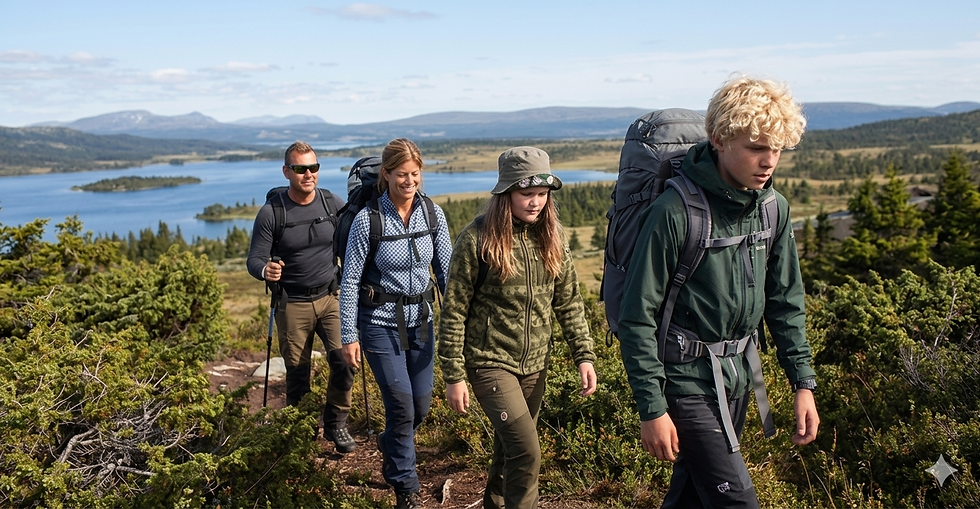
The mountain landscape itself defines the experience. The open mountain terrain, characterized by sweeping vistas, birch forests, and alpine meadows, creates a visual backdrop that transforms every ride into an adventure narrative. The extensive network of interconnected trails—spanning hundreds of kilometers—means that riders of any skill level can construct custom adventures tailored to their abilities and time constraints. Whether you're seeking a meditative 8-kilometer lakeside loop or a demanding 57-kilometer alpine expedition with over 850 meters of elevation gain, Sjusjøen accommodates all ambitions.

The region's stable climate is particularly noteworthy. Summer precipitation is moderate and typically brief, allowing trails to dry quickly. Average July temperatures hover between 15–18°C (59–65°F), while August sees similar conditions with highs around 16°C (62°F). This climate profile means you'll rarely encounter the oppressive heat that plagues lower-altitude destinations or the sudden weather volatility that characterizes higher mountain regions. Riders can plan with confidence, knowing that summer days will deliver consistent, pleasant conditions.
Pro-Tip: Sjusjøen sits at a "Goldilocks" elevation—high enough to ensure cool, dry conditions, yet low enough to avoid sudden weather systems. This stability makes it ideal for multi-day trips where you want predictable trail conditions without the equipment burden of high-altitude mountaineering.
The Terrain: Understanding Sjusjøen's Trail Ecosystem
Sjusjøen's trail network isn't monolithic; it's a sophisticated ecosystem of interconnected trail types, each serving distinct purposes and skill levels. Understanding this ecosystem is essential for planning your summer adventure.
Constructed Mountain Bike Trails
The Natrudstilen Bike Arena, situated adjacent to the biathlon stadium, represents the engineered heart of Sjusjøen's MTB infrastructure. This dedicated bike park features purpose-built trails with technical elements including berms, boardwalks, drops, and wallrides. The trails are graded by difficulty, ranging from introductory green routes suitable for children and novice riders to black diamond sections that demand advanced technical skills and commitment.
The "Afternoon Trail" exemplifies this category—a 5-kilometer route featuring narrow gravel sections interspersed with natural terrain and constructed technical features. This trail type allows riders to develop and test technical skills in a controlled environment before venturing onto the more exposed alpine routes. The constructed trails also serve a crucial social function, concentrating beginner and intermediate riders in areas where they can progress safely while more advanced riders explore the broader backcountry network.
Mountain Single-Track Routes
Beyond the bike park lies an extensive network of single-track routes that traverse the alpine terrain. These routes are characterized by their exposure to the landscape—narrow paths that wind through birch forests, across alpine meadows, and along ridgelines offering panoramic views. Routes like the Gjestbodsås Round (14 miles / 22.5 kilometers with 1,496 feet of elevation gain) represent the technical intermediate-to-advanced category. These trails demand solid bike handling skills, fitness, and route-finding ability, but reward riders with solitude and unobstructed mountain vistas.
The River Crossing route to Ljørkoia Shelter and Fire Pit loop (17.9 miles / 28.8 kilometers) exemplifies the moderate difficulty category. This route combines single-track sections with shelter stops and fire pits, enabling multi-hour adventures with built-in rest and social points. Such routes are ideal for groups where riders want to maintain cohesion while still experiencing technical terrain.
Gravel Road Networks
Sjusjøen's extensive gravel road system provides the connective tissue binding the region together. These roads, typically 4–6 meters wide and well-maintained, allow for sustained riding at moderate-to-high speeds while still maintaining immersion in the mountain landscape. The Lake Sjusjøen loop exemplifies this category—an 8-kilometer gravel circuit that combines accessibility (suitable for families, children, and riders on regular bikes) with genuine mountain scenery.
The gravel roads serve a strategic function in trail planning: they enable riders to link multiple single-track sections into longer adventures, provide bailout routes when weather deteriorates, and offer lower-intensity recovery riding between more technical sections. For multi-day trips, these roads become the primary navigation arteries.
Trail Specifications and Difficulty Framework
Trail Category | Typical Distance | Elevation Gain | Technical Difficulty | Recommended Skill Level | Primary Surface |
Lake Loop (Easy) | 8 km | Minimal (<100 m) | Beginner (S0–S1) | All ages, families | Gravel road |
Afternoon Trail (Intermediate) | 5 km | 200–300 m | Intermediate (S2) | Intermediate riders | Mixed (gravel + single-track) |
Lunkefjell Loop (Moderate) | 15.2 km | 1,300 ft (396 m) | Intermediate–Advanced (S2–S3) | Good fitness, advanced skills | Single-track + gravel |
Gjestbodsås Round (Hard) | 14 miles (22.5 km) | 1,500 ft (457 m) | Advanced (S3–S4) | Excellent fitness, technical mastery | Single-track, exposed terrain |
River Crossing Loop (Moderate–Hard) | 17.9 miles (28.8 km) | 1,750 ft (533 m) | Intermediate–Advanced (S2–S3) | Good fitness, intermediate+ skills | Single-track + shelter stops |
Extended Alpine Tour (Expert) | 57.7 km | 850+ m | Expert (S4–S5) | Elite fitness, expert navigation | Mixed alpine terrain |
Note: Difficulty ratings follow the Single Track Scale (STS), an international standard where S0–S1 represents beginner terrain, S2 intermediate, S3–S4 advanced, and S5–S6 expert/elite.
Summer Climate and Seasonal Conditions
Understanding Sjusjøen's summer climate is essential for packing, scheduling, and managing expectations. The region's elevation (800 meters) creates a microclimate distinct from lower-altitude Scandinavian destinations.
Temperature and Weather Patterns
June: Early summer brings rapidly warming temperatures, with daytime highs typically ranging from 12–15°C (54–59°F). Morning rides may require a light jacket, but afternoon conditions become pleasant. This period coincides with the transition to longer daylight hours—by late June, you'll have daylight until nearly 11 PM, enabling extended evening rides. Precipitation is moderate but can arrive suddenly; always carry a lightweight rain shell.
July: The warmest month, with average highs of 15–18°C (59–65°F). This is peak season for trail conditions and visitor activity. Humidity is moderate, and rainfall is typically brief. The extended daylight (nearly 24-hour twilight) creates opportunities for sunrise-to-sunset riding adventures. This is the optimal month for multi-day expeditions.
August: Similar to July but with slightly cooler temperatures (average highs around 16°C / 62°F). Late August marks the beginning of autumn transitions, with subtle shifts in vegetation color. Trail conditions remain excellent, and the month is less crowded than peak July. Many experienced riders prefer August for its combination of optimal conditions and reduced trail traffic.
Precipitation and Trail Conditions
Summer precipitation averages 60–80 mm per month, distributed across multiple brief events rather than sustained rainy periods. Trails dry rapidly due to the well-drained alpine soil and constant air circulation at elevation. Even after rain, most single-track sections are rideable within 2–4 hours. The gravel roads dry even faster, often within 1–2 hours.
Key Takeaway: Sjusjøen's summer climate is remarkably stable and predictable—warm enough for comfortable riding in minimal gear, cool enough to prevent overheating on climbs, and dry enough to maintain trail quality throughout the season. This consistency is why the region attracts serious cyclists from across Europe.
Accommodation and Logistical Infrastructure
Sjusjøen's tourism infrastructure has evolved to serve mountain bikers specifically. The region offers diverse accommodation options ranging from luxury mountain lodges to family-friendly cabins to budget-conscious camping facilities.
Cabin Rentals
For multi-day trips, cabin-based accommodations provide secure bike storage, laundry facilities, and the ability to prepare custom meals aligned with your training nutrition needs. Here is an example of top rated cabin: airbnb.com/h/sjusjoencabin
Bike Rental and Support Services
Sjusjøen Mountain Bike Park, located at the Natrudstilen complex, operates a comprehensive rental facility offering full-suspension MTBs, hardtail mountain bikes, and electric mountain bikes. Rental rates are competitive with European standards, typically ranging from 400–600 NOK per day (approximately €35–50 USD) for standard MTBs, with premium full-suspension models commanding higher rates. E-bike rentals (900–1,200 NOK per day) enable riders of varying fitness levels to access the same trails.
The rental facility also provides basic repair services, spare parts, and route planning assistance. For riders traveling without their own bikes, this infrastructure eliminates logistical barriers to accessing Sjusjøen's trails. The rental team's local knowledge proves invaluable for route selection, trail condition updates, and recommendations tailored to your skill level and available time.
Additional Services
Sjusjøen's supporting services ecosystem includes:
Canoe and kayak rental: 61° Nord Sjusjøen and Camp Sjusjøen offer paddle sports equipment, enabling multi-sport adventures combining biking and water activities.
Guided experiences: Local operators offer guided MTB tours, skills coaching, and navigation support for riders unfamiliar with the terrain.
Food and catering: Local providers deliver prepared meals to cabin rentals, eliminating the need to cook while traveling.
Training facilities: The Natrudstilen Arena complex, while primarily serving winter sports, offers running tracks and hill interval training opportunities for cross-training.
Strategic Trail Planning: Constructing Your Summer Adventure
Sjusjøen's extensive trail network enables infinite route combinations. However, strategic planning ensures you maximize your time and experience.
Single-Day Rides
For day-trip visitors, the Lake Sjusjøen loop (8 km, minimal elevation) provides an accessible introduction. This route combines family-friendly accessibility with genuine mountain scenery, making it ideal for assessing local conditions and building confidence before tackling more technical terrain.
Intermediate riders with 4–6 hours available should target the Afternoon Trail (5 km) combined with adjacent single-track sections, yielding a 15–20 km adventure with 500–600 meters of elevation gain. This combination provides technical skill development within a manageable timeframe.
Advanced riders should prioritize the Gjestbodsås Round or Lunkefjell loop (14–15 miles each), which deliver authentic alpine single-track exposure with sustained technical challenges. These routes require 3–4 hours of focused riding and should only be attempted by riders with demonstrated advanced skills.
Multi-Day Expeditions
Sjusjøen's trail network supports sophisticated multi-day adventures. A three-day itinerary might include:
Day 1: Arrival and acclimatization. Ride the Lake Sjusjøen loop (8 km) to establish local conditions. Spend afternoon exploring the Natrudstilen Bike Arena, focusing on technical skill development. Evening: settle into cabin accommodation, prepare gear.
Day 2: Full-day expedition. Depart early to tackle the River Crossing loop (17.9 miles), incorporating shelter stops at Ljørkoia for recovery and social engagement. This route balances technical challenge with built-in rest points, preventing fatigue-induced mistakes.
Day 3: Advanced technical riding. Depending on fitness levels and weather, riders can attempt the Gjestbodsås Round (14 miles of technical single-track) or explore secondary single-track networks accessible via gravel road connections. Afternoon departure provides travel buffer.
This itinerary allows skill progression across the trip while maintaining safety and enjoyment. Multi-day trips also provide psychological benefits—the extended immersion in mountain landscape creates meditative restoration unavailable in day-trip formats.
Bike Specifications and Equipment Recommendations
Sjusjøen's terrain demands appropriate equipment. While the region accommodates various bike types, certain specifications optimize the experience.
Hardtail vs. Full-Suspension
Hardtail mountain bikes (front suspension only) excel on Sjusjøen's gravel roads and moderate single-track sections. Their efficiency on climbing sections and lower maintenance requirements make them popular among intermediate riders. However, technical single-track sections with roots, rocks, and exposure benefit significantly from full-suspension systems that absorb impacts and improve traction on technical descents.
Recommendation: Riders tackling primarily gravel roads and beginner-intermediate trails should rent or bring hardtails. Those attempting advanced single-track (Gjestbodsås Round, Lunkefjell) should prioritize full-suspension bikes with 100–150mm travel, optimizing both climbing efficiency and descending control.
Tire Selection
Sjusjøen's mixed terrain demands versatile tire specifications. Tires in the 2.1–2.4 inch width range provide optimal balance between rolling efficiency on gravel roads and traction on technical single-track. Tread patterns should emphasize moderate knobs rather than aggressive lugs—Sjusjøen's well-drained soil rarely produces the mud conditions that demand extreme tread designs.
Tire pressure management is critical. Higher pressures (2.0–2.2 bar) optimize gravel road efficiency, while lower pressures (1.6–1.8 bar) improve single-track traction. Adjusting pressure between terrain types (requiring only a floor pump) optimizes performance across diverse sections.
Drivetrain Considerations
Sjusjøen's elevation gain demands appropriate gearing. Routes with 1,500+ feet of elevation gain require low-end gearing (34-tooth front chainring with 32-tooth rear cog or equivalent) to maintain sustainable climbing cadences. Single-speed or fixed-gear bikes, while popular in some mountain biking communities, are impractical for Sjusjøen's extended climbing sections.
Safety Considerations and Risk Management
Mountain biking in alpine terrain demands attention to safety protocols. Sjusjøen's open landscape, while visually stunning, presents exposure and navigation challenges.
Navigation and Route-Finding
Most established trails are well-marked with signage and trail blazes. However, secondary routes and cross-country connections require map navigation skills. Riders should carry physical maps or GPS devices with offline map capability. The Ut.no website provides detailed trail maps and descriptions; downloading these resources before departing ensures navigation capability even without cellular service.
Weather Management
Summer weather at 800 meters elevation can change rapidly. Afternoon thunderstorms, while brief, can create hazardous conditions. Riders should monitor weather forecasts before departing and plan routes to return to base before afternoon storms typically develop (usually after 4–5 PM). Carrying lightweight rain shells and knowing bailout routes ensures safety when conditions deteriorate unexpectedly.
Fitness and Pacing
Extended alpine riding at elevation demands appropriate fitness levels. Riders unaccustomed to sustained climbing should start with moderate routes (8–15 km, 500–700 m elevation gain) before attempting longer expeditions. Altitude acclimatization isn't critical at 800 meters, but the combination of elevation and sustained climbing demands respect.
Hydration and Nutrition
The cool mountain air can mask dehydration risk. Riders should consume 500–750 ml of fluid per hour during active riding, regardless of subjective thirst perception. Extended rides (4+ hours) require caloric supplementation—energy bars, gels, or trail mix prevent bonking and maintain mental acuity on technical terrain.
Safety Protocol: Always inform your accommodation provider of your intended route and expected return time. Carry a fully charged mobile phone and consider a personal locator beacon for extended backcountry routes. The Norwegian emergency number is 112.
The Broader Sjusjøen Experience: Beyond Mountain Biking
While mountain biking represents the primary summer activity, Sjusjøen offers complementary experiences that enhance multi-day visits.
Hiking and Alpine Exploration
The same mountain landscape accessible by bike invites hiking exploration. Nevelfjell (1,089 meters) offers a classic peak hike with panoramic views of the Rondane and Jotunheimen ranges. Snørvillen (995 meters) provides a 10-kilometer loop through diverse ecosystems—marshes, birch forests, and alpine terrain. These hikes complement biking by providing active recovery days and alternative perspectives on familiar landscapes.
Water Activities
Lake Sjusjøen and secondary lakes (Kroksjøen, Næra) invite paddling and swimming. Canoe and kayak rentals enable multi-sport adventures, with paddle trips providing active recovery from intensive biking days. The clear mountain water, while cold, is refreshing after extended rides.
Cultural and Culinary Experiences
Sjusjøen's mountain culture is deeply rooted in Norwegian outdoor traditions. Local farm visits, cheese tastings, and traditional meal experiences provide cultural immersion. The region's culinary scene emphasizes local ingredients—fresh trout, wild berries, and traditional breads feature prominently in cabin-based meals and local restaurants.
Comparative Analysis: Sjusjøen vs. Other European MTB Destinations
Destination | Elevation | Trail Variety | Summer Climate | Infrastructure | Best For |
Sjusjøen, Norway | 800 m | Excellent (gravel, single-track, constructed) | Stable, cool (15–18°C) | Excellent (rentals, guides, accommodation) | Skill progression, multi-day adventures |
Whistler, Canada | 1,100–2,200 m | Excellent (lift-served downhill focus) | Variable (12–20°C) | Excellent (resort infrastructure) | Downhill specialists, resort-based riding |
Moab, Utah | 1,200–1,800 m | Excellent (slickrock, technical terrain) | Hot (25–32°C) | Good (town-based services) | Technical terrain specialists |
Chamonix, France | 1,000–2,500 m | Excellent (alpine terrain, lift access) | Variable (10–18°C) | Excellent (resort town infrastructure) | Alpine specialists, lift-served riding |
Sedona, Arizona | 1,200–1,800 m | Good (red rock terrain, scenic) | Hot (28–35°C) | Good (town-based services) | Desert terrain enthusiasts |
Sjusjøen's unique positioning combines alpine terrain accessibility with stable summer conditions and comprehensive infrastructure—a combination rarely found in European destinations.
Seasonal Timing and Planning Strategies
While all three summer months (June, July, August) offer excellent riding, strategic timing optimizes your experience based on personal priorities.
June: Early Season Advantages and Challenges
Early June offers unique advantages: lower visitor density, extended daylight hours enabling evening rides, and the visual spectacle of alpine flowers in full bloom. Trail conditions are excellent, and accommodation availability is superior to peak July. However, higher elevation sections may retain snow patches into early June, and weather can be more volatile.
Ideal for: Riders seeking solitude, photographers capturing alpine wildflowers, those avoiding peak-season crowds.
July: Peak Season Conditions
Peak July offers maximum daylight (nearly 24-hour twilight), warmest temperatures, and optimal trail conditions. However, accommodation fills quickly, prices peak, and trails experience higher traffic. Popular routes may feel crowded during afternoon hours.
Ideal for: Families with fixed summer schedules, those seeking guaranteed good weather, riders comfortable with crowds.
August: Late-Season Optimization
August provides the "sweet spot"—excellent trail conditions, slightly fewer visitors than July, still-extended daylight (though noticeably shorter than July), and subtle shifts in landscape color presaging autumn. Accommodation becomes available as July crowds depart.
Ideal for: Experienced riders prioritizing trail quality and solitude, those flexible with scheduling, photographers seeking autumn light.
Budget and Cost Considerations
Understanding the financial investment required for a Sjusjøen summer biking trip enables appropriate planning.
Accommodation: Cabin rentals range from 800–2,500 NOK per night (€70–220 USD) depending on size, amenities, and season. Budget accommodations and camping facilities offer lower-cost alternatives (400–800 NOK per night).
Bike Rental: Standard MTB rentals cost 400–600 NOK per day (€35–50 USD); full-suspension bikes command 600–900 NOK per day; e-bikes cost 900–1,200 NOK per day. Multi-day rental discounts are common.
Food: Self-catering via cabin kitchens costs 150–250 NOK per day (€13–22 USD). Restaurant meals range from 150–400 NOK per entree (€13–35 USD). Local markets offer groceries at European standard prices.
Activities and Services: Guided tours cost 600–1,200 NOK (€53–107 USD) per half-day. Canoe rentals cost 400–600 NOK per day. Most trail access is free.
Total Budget Estimate (3-day trip, two people):
Accommodation (2 nights): 1,600–3,000 NOK (€140–270)
Bike rental: 2,400–3,600 NOK (€210–320)
Food: 900–1,500 NOK (€80–135)
Activities/services: 600–1,200 NOK (€53–107)
Total: 5,500–9,300 NOK (€485–825) per person
This represents mid-range European mountain biking costs—comparable to Alpine destinations but significantly lower than resort-based destinations like Whistler.
Future Trends and Destination Evolution
Sjusjøen's mountain biking infrastructure continues evolving. Recent developments include expanded trail networks, enhanced rental facilities, and growing integration with European mountain biking communities. The region's commitment to sustainable tourism infrastructure positions it as a model for responsible mountain destination development.
The rise of e-mountain biking has particular significance for Sjusjøen. E-bikes enable riders of varying fitness levels to access the same terrain, democratizing access to advanced trails. As e-bike technology improves and costs decrease, Sjusjøen's extensive gravel road network becomes increasingly attractive to broader audiences.
Multi-sport tourism is expanding. Sjusjøen's positioning as a combined biking-hiking-paddling destination appeals to active travelers seeking diverse experiences. Future infrastructure development will likely emphasize these cross-sport synergies.
Practical Logistics: Getting to Sjusjøen
By Air: Oslo Gardermoen Airport (OSL) is the primary entry point, located approximately 150 kilometers south of Sjusjøen (2.5–3 hour drive). International connections to Oslo are extensive from most major European and North American cities.
By Ground: From Oslo, Sjusjøen is accessible via the E6 highway toward Lillehammer (approximately 2 hours), then local roads to Sjusjøen (20 minutes). Car rental is recommended for accessing trailheads and exploring the broader region. Alternatively, train service connects Oslo to Lillehammer (2 hours), with local shuttle services available to Sjusjøen.
Bike Transport: Airlines typically charge 50–150 EUR for bike transport. Alternatively, bike rental at destination eliminates transport hassles. Many European cyclists ship bikes via courier services (100–200 EUR) for multi-week stays.
Related: Sjusjøen Snow Report: When Does the Season Open & Close? (Month-by-Month Guide) — month-by-month snow depth, grooming schedules, and season opening and closing dates based on 33 winters of data.
Final Considerations: Why Sjusjøen Deserves Your Summer Adventure
Sjusjøen represents a convergence of factors rarely found in mountain biking destinations. The combination of stable summer climate, diverse trail infrastructure, comprehensive support services, and stunning alpine landscape creates an environment optimized for skill progression, multi-day adventures, and genuine mountain immersion.
The region accommodates all skill levels while challenging advanced riders. Beginner-friendly lake loops provide confidence-building introductions, while technical alpine single-track demands expert-level skills. This vertical integration—the ability for diverse skill levels to ride together yet each find appropriate challenges—distinguishes Sjusjøen from specialized destinations serving only specific rider profiles.
The landscape itself transforms the experience. Unlike terrain parks or purpose-built MTB resorts, Sjusjøen's trails traverse authentic alpine terrain—open meadows, birch forests, ridgelines offering panoramic vistas. This environmental immersion provides psychological benefits unavailable in constructed-terrain environments. Riders report that extended Sjusjøen trips create lasting emotional connections to mountain landscapes, often inspiring future trips and deeper engagement with outdoor pursuits.
The summer season creates optimal conditions. The stable climate eliminates weather-related uncertainty, extended daylight enables flexible scheduling, and the combination of cool temperatures and moderate precipitation maintains trail quality throughout the season. Unlike spring (muddy trails) or autumn (unpredictable weather), summer at Sjusjøen delivers consistent, predictable conditions.
For serious mountain bikers, Sjusjøen represents not merely a destination but a benchmark—a standard against which other mountain biking experiences are measured. The region's comprehensive infrastructure, diverse terrain, and stable climate create conditions enabling focused skill development, ambitious multi-day adventures, and genuine mountain immersion. Whether you're a weekend warrior seeking a memorable escape or a dedicated cyclist pursuing skill progression, Sjusjøen in summer 2026 offers an experience worth prioritizing.
The Bottom Line: Sjusjøen combines world-class trail infrastructure with stable summer climate, diverse accommodation options, and comprehensive support services—creating an environment where riders of all levels can progress, explore, and connect with an authentic mountain landscape. The investment in planning and logistics yields returns measured not in kilometers or elevation gain, but in lasting memories and transformed relationships with mountain terrain.