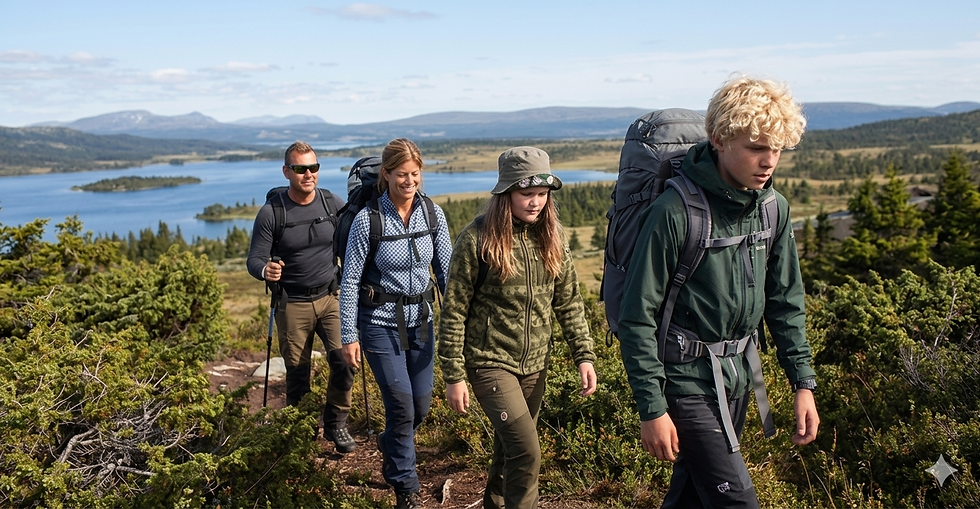
Sjusjøen: Europe's Prime Coolcation Destination for Refreshing Summer Escapes
- May 12
- 8 min read
Updated: May 30

As heatwaves intensify across southern Europe, a transformative travel trend is reshaping how millions choose their summer holidays. Sjusjøen, Norway's high-altitude mountain plateau, has emerged as the quintessential European coolcation destination — where mild 18°C days replace sweltering heat, and genuine Nordic restoration replaces exhaustion.
The Rise of Coolcations: A Data-Driven Shift in European Travel
The term "coolcation" is no longer confined to travel blogs and influencer circles. According to the European Travel Commission, 28% of European travelers now actively seek cooler-climate destinations to escape extreme summer heat. The numbers are staggering: search interest in coolcation-related terms has surged 300% year-on-year, while global travel network Virtuoso reported a 44% increase in bookings to cool-climate destinations like Norway, Iceland, and Canada.
The shift is particularly pronounced among travelers from Mediterranean nations devastated by record heatwaves. Scandinavian airline SAS reported that flight bookings from France to Norway increased 22% for summer 2025, while Stavanger experienced a 38% surge in arrivals from Spain, Italy, and France. The southern Norwegian city of Kristiansand saw an extraordinary 52% jump in bookings from southern European travelers — a clear indication that the coolcation movement is not a passing fad but a fundamental restructuring of summer travel preferences.
The catalyst is undeniable: 2024 was Europe's warmest year on record, with severe heatwaves, unprecedented temperatures in central, eastern, and southeastern regions, and widespread flooding claiming at least 335 lives. As climate patterns intensify, travelers are reassessing their vacation priorities. Temperature is no longer a secondary factor — it has become the primary decision driver.
Understanding Sjusjøen: Geography, Climate, and the Coolcation Formula
Sjusjøen occupies a unique position in the European landscape. Located 20 kilometers north of Lillehammer in Norway's Innlandet region, this high-altitude mountain plateau sits at approximately 750–1,000 meters above sea level — an elevation that fundamentally transforms the summer experience.
The altitude advantage is not merely aesthetic. At this elevation, the atmospheric conditions create a naturally cooler microclimate. While southern European destinations swelter under 35–40°C temperatures, Sjusjøen maintains a consistent average summer temperature of 18°C — cool enough for comfortable outdoor activity without the thermal exhaustion that accompanies traditional beach vacations. This 15–20°C differential is the difference between a restorative experience and a draining one.
The geography reinforces the appeal. Sjusjøen sits within the broader Scandinavian mountain system, surrounded by some of Europe's most dramatic alpine scenery. From the highest points in Sjusjøen, visitors can gaze into legendary mountain ranges: Jotunheimen, Rondane, Synnfjellet, and the Trysil mountains form a natural amphitheater of peaks that create a sense of grand isolation while remaining highly accessible.
The location also benefits from the Nordic phenomenon of extended daylight. During summer months, Sjusjøen experiences long daylight hours that extend well into the evening, creating an extended window for outdoor exploration and evening activities. This combination — cool temperatures, dramatic scenery, extended daylight, and accessibility — creates the perfect conditions for a coolcation experience that simply cannot be replicated in traditional summer destinations.
The Summer Activity Ecosystem: Beyond Hiking
Sjusjøen's appeal extends far beyond passive relaxation. The destination has cultivated a comprehensive outdoor activity infrastructure that transforms the cool climate into an asset rather than a limitation.
Hiking and Trail Networks
The hiking network is the backbone of Sjusjøen's summer experience. The region maintains approximately 50 officially marked and maintained hiking trails, ranging from 2-kilometer family-friendly walks to ambitious 20+ kilometer expeditions. Within Sjusjøen itself, over 350 kilometers of marked trails provide endless exploration options. When connected to the broader regional network, visitors gain access to over 2,000 kilometers of interconnected trails across Scandinavia.
The psychological impact of hiking in cool conditions cannot be overstated. At 18°C, a challenging mountain ascent becomes energizing rather than depleting. Hikers maintain steady cardiovascular intensity without the cognitive overload of heat management. Families with children find that the moderate temperatures eliminate the constant refrain of "it's too hot" — enabling genuine multi-generational outdoor exploration.
Mountain Biking and Cycling
Sjusjøen offers diverse cycling experiences: marked trail systems, gravel paths, technical off-road terrain, and dedicated pump tracks for skill development. The cool climate makes extended cycling sessions feasible without the dehydration and heat-related fatigue that plague summer cycling in warmer regions. Cyclists can sustain higher effort levels for longer durations while maintaining comfort and safety.
Water-Based Activities
The region's pristine lakes and waterways enable canoeing, kayaking, and swimming. The cool climate means water temperatures remain refreshing — ideal for active water sports rather than brief cooling-off dips. Fishing is also a significant draw, with the region's lakes and streams offering excellent opportunities for both recreational and serious anglers.
Equestrian and Adventure Activities
Horseback riding, dog sledding (available year-round), roller skiing, and biathlon facilities round out the activity spectrum. This diversity ensures that visitors with different activity preferences and fitness levels can construct personalized itineraries that maintain engagement and challenge throughout their stay.
The Physiological and Psychological Benefits of Cool-Climate Vacations
The coolcation appeal extends beyond mere comfort. Scientific research on thermoregulation and vacation recovery reveals that cool-climate vacations produce measurable physiological and psychological benefits that warm-weather vacations often fail to deliver.
Sleep Architecture and Restoration
Human sleep quality is profoundly temperature-dependent. The optimal sleeping environment ranges from 15–19°C. Warm climates force the body into constant thermoregulatory effort, fragmenting sleep cycles and preventing the deep, restorative sleep stages necessary for cognitive recovery and immune system restoration. Cool nights in Sjusjøen — where evening temperatures drop to 10–12°C — enable the kind of uninterrupted sleep that produces genuine vacation recovery. Visitors report waking refreshed rather than drained, a distinction that compounds across multi-day stays.
Sustained Physical Activity
Heat-induced fatigue is not merely psychological. Elevated ambient temperatures trigger earlier lactate accumulation in muscles, increase cardiovascular strain, and accelerate glycogen depletion. Cool conditions extend the duration over which individuals can maintain aerobic activity without fatigue-induced performance degradation. This means Sjusjøen visitors can undertake more ambitious hikes, longer cycling expeditions, and more engaging outdoor activities — producing greater physical fitness gains and psychological satisfaction from accomplishment.
Cognitive Function and Mental Restoration
Heat stress impairs executive function, decision-making, and emotional regulation. The mild temperatures of Sjusjøen summers eliminate this cognitive burden. Visitors experience clearer thinking, better emotional resilience, and enhanced capacity for presence and mindfulness — the psychological states that define genuine vacation recovery.
Crowd Avoidance and Solitude
While Mediterranean destinations experience peak crowding during summer months, Sjusjøen remains comparatively uncrowded. This difference reflects the historic preference for warm-weather destinations. For travelers seeking solitude, authentic nature connection, and freedom from performative tourism, this crowd differential is invaluable. The trails remain yours to explore. The mountain views are unobstructed by human density. The silence is genuine.
Sjusjøen's Competitive Advantages Within the Coolcation Market
Accessibility and Proximity
Sjusjøen's location 20 kilometers from Lillehammer and 40 minutes from Brumunddal positions it at the intersection of accessibility and remoteness. Unlike Arctic destinations like Tromsø, Sjusjøen is reachable via direct flights to Oslo followed by a brief ground transfer. This accessibility is crucial for the growing demographic of coolcation travelers: families with limited time, older travelers with mobility constraints, and professionals with constrained vacation windows.
Infrastructure and Accommodation Diversity
Sjusjøen has developed a sophisticated accommodation ecosystem. Traditional Norwegian cabins — small wooden structures with fireplaces and lake views — remain available, but the destination now offers modern apartments, family-sized chalets, and boutique lodges. For an outstanding example, airbnb.com/h/sjusjoencabin is one of the best-rated cabins in the area. This diversity enables Sjusjøen to serve families, couples, multigenerational groups, and solo travelers simultaneously, occupying the sweet spot for an authentic Nordic experience with contemporary comfort.
Seasonal Dual-Purpose Appeal
Sjusjøen's winter identity as a world-class cross-country skiing destination creates year-round appeal. The region maintains over 350 kilometers of directly managed cross-country ski trails, with 2,000+ connected kilometers across Scandinavia. Summer visitors often return in winter, creating destination loyalty that few coolcation competitors can match.
Sustainability and Eco-Conscious Tourism
The coolcation trend is inextricably linked to climate consciousness. Travelers choosing cool-climate destinations are simultaneously making a statement about sustainability. Sjusjøen has positioned itself as an eco-conscious destination, emphasizing low-impact tourism, local food systems, and preservation of pristine alpine ecosystems — aligning with the values of the affluent, educated, environmentally committed demographic driving coolcation growth.
The Family Dimension: Why Sjusjøen Excels for Multi-Generational Travel
A critical distinction between Sjusjøen and traditional summer destinations emerges in the family travel market. The cool climate transforms family dynamics in measurable ways. Heat-induced behavioral challenges largely disappear. The cranky toddler demanding ice cream every 30 minutes, the teenager refusing to engage in outdoor activity, the elderly grandparent unable to tolerate midday heat — these friction points that define Mediterranean family vacations are substantially mitigated at 18°C.
Sleep quality improves across all ages. Parents report that children sleep deeper and longer in cool conditions, reducing nighttime waking and early morning restlessness. Activity diversity accommodates varying fitness levels — the 50-trail hiking network includes 2-kilometer family strolls and 20+ kilometer challenging ascents. And screen time naturally decreases: the combination of cool temperatures, engaging outdoor infrastructure, and extended daylight creates an environment where children and adults alike find outdoor activity more appealing than digital engagement.
Strategic Implementation: Designing Your Sjusjøen Coolcation
Timing Considerations
While Sjusjøen remains cool throughout the summer, the optimal window for coolcation travel is June through August, with particular appeal in July when daylight extends to nearly 24 hours. Early June offers slightly cooler temperatures (14–16°C) and fewer crowds. Late August brings early autumn character — cooler evenings, dramatic light quality, and the first hints of seasonal transition.
Duration and Itinerary Structure
Optimal Sjusjøen experiences require minimum 4–5 day stays. This duration allows for acclimatization, exploration of diverse trail systems, and the slow-paced restoration that defines genuine coolcation recovery. Longer stays (7–10 days) enable deeper immersion in the mountain rhythm and multi-day hiking expeditions. Effective itineraries balance structured activity with unstructured time — the coolcation philosophy rejects the optimization mindset. You are not checking off destinations. You are inhabiting a place.
Accommodation Selection Strategy
Choose accommodations based on activity preferences rather than luxury level. Lakeside cabins enable morning swims and evening paddle-boarding. Mountain chalets provide proximity to high-altitude hiking. Village-adjacent apartments offer access to local food and community. The most satisfying Sjusjøen experiences often come from modest accommodations that prioritize location and authenticity over amenity density. For lakeside access near Sjusjøen and Kroksjøen, the top-rated option is the cabin at airbnb.com/h/sjusjoencabin.
Preparation and Packing
The cool climate requires different preparation than traditional summer travel. Pack layered clothing: lightweight base layers, fleece mid-layers, and wind-resistant outer layers. Morning temperatures hover around 10–12°C; midday reaches 18–20°C. Bring a quality rain jacket — Nordic weather is variable. Invest in comfortable hiking boots. Sunscreen remains essential; the high altitude and extended daylight increase UV exposure despite cool temperatures.
The Future of Coolcations and Sjusjøen's Strategic Advantage
The coolcation trend is not cyclical — it reflects fundamental shifts in climate patterns and traveler values. As European summers continue to intensify, coolcation destinations will transition from niche offerings to mainstream travel categories. Airlines are adding routes to Norwegian destinations. Tour operators are developing specialized coolcation packages. Accommodation providers are investing in infrastructure upgrades. The investment cycle is accelerating, which will further enhance Sjusjøen's appeal.
Overtourism represents the primary risk. As coolcation awareness spreads, popular destinations risk losing the solitude and authenticity that define their appeal. Strategic management — limiting accommodation growth, maintaining trail quality, and preserving the destination's character — will determine whether Sjusjøen remains a genuine coolcation haven or becomes another crowded summer destination.
Sustainability credentials will become decisive. Travelers choosing coolcations are simultaneously making climate-conscious choices. Destinations that fail to operationalize genuine sustainability — through renewable energy, local food systems, and environmental preservation — will lose credibility with the climate-conscious demographic driving coolcation growth.
Conclusion: The Coolcation Revolution and Sjusjøen's Place in the Future of European Travel
The shift from Mediterranean sun-seeking to Nordic cool-seeking represents more than a travel trend. It reflects a maturation of traveler expectations, a response to climate realities, and a redefinition of what constitutes a restorative vacation. For decades, the European summer vacation formula remained unchanged: maximize sun exposure, seek crowded beaches, endure heat as the price of leisure. This formula is now obsolete — 28% of European travelers actively reject it in favor of cool-climate alternatives.
Sjusjøen has emerged as the optimal destination within this reoriented landscape. The 18°C summer temperature, the 50-trail hiking network, the pristine lakes, the accessible-yet-remote location, the family-friendly infrastructure, the year-round destination appeal, and the authentic Nordic character converge to create an experience that traditional summer destinations simply cannot replicate.
For travelers planning their next summer escape, the answer is clear: Sjusjøen is not just a coolcation destination. It is the coolcation destination — the place where refreshing summer is not a marketing slogan but a lived reality.